



What Everyone Can Learn from Aretha Franklin’s Lack of Estate Planning
Start Planning Your FutureOn August 16, 2018, the “Queen of Soul” Aretha Franklin died at her home in Detroit after a prolonged battle with pancreatic cancer.
Ms. Franklin had many significant accomplishments throughout her career: she was the first woman admitted into the Rock and Roll Hall of Fame, she had 88 Billboard Chart hits, and more than two dozen Top 40 hits.
Unfortunately, for her family, estate planning cannot be listed as one of those accomplishments.
When Ms. Franklin died at the age of 76, she did so without leaving behind a will or any form of estate planning. Under Michigan law, as in most states (including Colorado), her four sons will equally divide their mother’s assets after everything passes through probate.
That process is sure to take years and will likely play out in a very public setting, according to an attorney and counselor at law with the Hammond Law Group. Hammond practices only estate planning and elder law.
“For Aretha Franklin, probate will surely be very costly to her estate. There are some concerns that now everything that she owned will be made public. The IRS is going to be involved in evaluating the assets and all the property so that they can get any taxes that are due. Any estate taxes are going to have to be paid because she didn’t do anything to protect those assets from estate tax, and, most likely, she’s going to have an estate above the current exemption of $11.2 million. Anything above and beyond that is going to be taxed at 40 percent for her beneficiaries. By planning, she could have reduced these costs to her estate,” he said.
Ms. Franklin left behind four sons, ages 48 to 63: Clarence Franklin, Edward Franklin, Kecalf Franklin, and Ted White Jr. The eldest son, Clarence, has unspecified special needs and, according to TMZ, requires “financial and other forms of support.”
“Even though one of her sons has special needs, he may not be considered as more important because the law will see that everything gets divided by four. But maybe he needs a little extra because he has special needs, and he’s not going to qualify for government assistance because he has this large inheritance. She could have taken care of that ahead of time by outlining those special needs in a distribution pattern to the different beneficiaries. Not every beneficiary is the same, even though the courts are going to treat them the same because there was no will, there was no trust.”
Ms. Franklin’s estate will now enter probate, the legal process of getting titles or assets out of the name of someone who passed away and into the name of their beneficiaries. Of course, had Ms. Franklin created a will, that would not have prevented her assets from needing to pass through probate. The best way to avoid probate is by creating a revocable living trust.
“Having a will essentially guarantees probate. It’s helpful because now your wishes are known, but it is still going to guarantee probate.
“A revocable living trust means that you can avoid probate and amend the trust while you are still living,” said Spencer. “The trust holds the title to your property and assets, but you remain completely in charge of the trust while you are alive. Then, when you pass away, the trust dictates who is going to administer it and how those assets are going to be distributed. You don’t have to go to court and wait for a judge to sign off on it because all of those directions are in the revocable living trust.”
There are many reasons that people avoid estate planning. The most common is that thinking about the end of life can be uncomfortable.
“A lot of people don’t want to face their mortality. Aretha Franklin had people advising her that she needed to get this taken care of. So, it’s impossible to say why nothing was done,” said Spencer.
So far there has been no sign of conflict between the four sons. All four have filed papers in Michigan’s Oakland County court (Clarence is represented by a guardian), and a niece has accepted the role of executor. Hopefully, the civility will last. Any acrimony between the sons or challenges from outside parties could slow the probate process down and drag it out.
“Family infighting is the most common complication in probate cases. This usually occurs because of a lack of planning or openness about the estate plan – not making sure that everybody in the family was aware of the plan,” said Spencer.
Working with an estate attorney can help avoid these potential complications. An estate attorney will work with you to find the best course, not just for your estate, but also should you need long-term care while you are still alive. The attorney can also advise you on how to make sure that your family understands the decisions that you made to avoid potential conflicts after you have passed away.
To learn more about your options for planning around and for disability and death – and to make sure that your assets pass to your family as smoothly as possible – click here to contact the Hammond Law Group.
Photo By: Atlantic Records (Lifetime): Published before 1978 without a copyright notice) [Public domain], via Wikimedia Commons
Start Planning Your Future
Contact Us & We’ll Guide You Through Your Next Steps!
Required Fields*
Your Information Is Safe With Us.
We respect your privacy. The information you provide will be used to answer your question or to schedule an appointment if requested.
Our Practice Areas in Colorado Springs and Denver
At Hammond Law Group, we focus on helping Colorado families build strong, forward-looking estate plans that protect assets and preserve family harmony.


Real Clients, Real Reviews

Getting Started Has Never Been Easier — Attend a Workshop or Webinar
At Hammond Law Group, we believe that the foundation of good estate planning lies in knowledge and understanding. Our approach starts with education. Join our highly informative workshop on wills, trusts, estate planning, and more, where we provide you with comprehensive information to get you started in designing your personalized plan.
By attending our workshop or webinar, you not only … exclusive offer of a complimentary consultation with an experienced attorney
(a $500-750 value).
Our workshops fill up quickly so reserve your seat today.
Your Experienced Estate Planning & Elder Law Advisors
We have a team-centered approach. While each client’s family works with one attorney, our attorneys regularly discuss the design of our plans with each other in order to ensure we’re doing everything possible to help you meet your goals.
In addition, each client works primarily with one paralegal, who gets to know you and your estate plan intimately through the design and
implementation process. The biggest complaint people have about
lawyers is lack of communication, and by working as a team we have
virtually eliminated this complaint for our clients.
Learn more about our family and then let us learn more about yours.
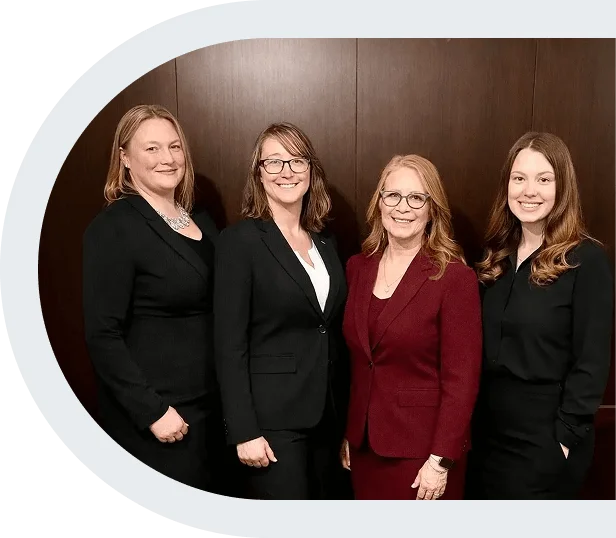
Meet Hammond Law Group Team
At Hammond Law Group, our estate planning attorneys work together to create meaningful, lasting estate plans for Colorado families. Each member of our team shares a commitment to personal connection, clear communication, and compassionate service.





Professional Associations






Questions or Schedule A Consultation? Click to Call (719) 520-1474
Questions or Schedule A Consultation? Click to Call (719) 520-1474
our Recent Blogs

This Year, Finally Check Estate Planning Off Your List
This Is the Year You Finally Check It Off the List There’s something…


How Is Trust Handled After Death in Colorado?
When a loved one passes away, many families face a difficult question:…

Local Law Firm Encourages Community to Re-Imagine Their Relationship with Death
Colorado Springs, CO., September 25, 2017 – Hammond Law Group of Colorado…
Our Locations
Hammond Law Group PC
Colorado Springs, CO
2955 Professional Place, Ste 300, Colorado Springs, CO 80904
(719) 520-1474
(719) 520-1474
Hammond Law Group PC
Denver, CO
865 Albion Street, Ste 250, Denver, CO 80220
(303) 736-6060
(303) 736-6060