



The Role of Compensation in Estate and Medicaid Planning
Start Planning Your Future

A comprehensive estate plan should accomplish a number of estate planning goals and take into account various estate planning objectives. For example, planning for the possibility you will one day need to pay for long-term care (LTC), referred to as “Medicaid planning,” is a common estate planning goal. The overall objective of Medicaid planning is to reduce your “countable resources” so you will be eligible for Medicaid should you need it. While it may not be something you previously considered, compensation can play a role in reducing the value of your countable resources, thereby helping you qualify for Medicaid. Medicaid, in turn, can help cover your LTC costs.
Why Is Medicaid Planning Popular?
Although none of us really enjoy thinking about it, the reality is, we all stand a good chance of ending up in LTC at some point. The longer you live, the greater the odds are you will need LTC. The cost of that care will likely be prohibitive and could quickly diminish your retirement nest egg if you don’t get help covering the cost. As of 2016, the average yearly cost of LTC across the nation was $80,000 and the average length of stay was 2.5 years. While most seniors count on Medicare to cover most of their health care expenses, one thing Medicare will not cover is the cost of LTC. Private health insurance policies also routinely exclude costs associated with LTC unless you purchased a separate policy at an additional cost.
The good news is that Medicaid does cover LTC costs. In fact, over half of all seniors in LTC depend on Medicaid to help cover the cost of that care. Before you can start counting on Medicaid to help, in the event you end up in LTC, you must first be eligible for Medicaid benefits. Because Medicaid is intended to provide assistance to financially needy individuals and families, your income and “countable resources” cannot exceed the program eligibility limits. In many states, the countable resources limit is as low as $2,000 for an individual applicant. Although Medicaid does exempt some assets from consideration when calculating the value of an applicant’s countable resources, many seniors find that their non-exempt assets exceed the limit if they failed to plan ahead through the use of Medicaid planning tools and strategies. One of those strategies involves the use of compensation.
How Can Compensation Help Me Qualify for Medicaid?
As previously mentioned, the goal of Medicaid planning is to reduce the value of your non-exempt assets, or “countable resources,” so you will qualify for Medicaid if you need it. Using compensation for services rendered is one way to accomplish that goal. As a senior, you will probably need assistance around the house or with the daily tasks of living. Entering into a contract with someone to provide that assistance can effectively lower your countable resources. For instance, imagine the Medicaid countable resources limit is $2,000. Your most valuable assets are your home, valued at $250,000, and $25,000 cash in a bank account.
Your home is exempt for Medicaid eligibility purposes, however, the cash puts you $23,000 over the countable resources limit. If you enter into a personal services contract with a caregiver who you will pay $1,000 per month for the next two years or a total of $24,000, that compensation can effectively reduce your non-exempt assets to just $1,000 – well under the Medicaid countable resources limit. The caregiver, however, must remember the compensation received under the contract is considered employment income. As such, the income is income taxable and subject to self-employment taxes.
Medicaid planning is a very important addition to any comprehensive estate plan. The individual nature of Medicaid planning, however, makes it important to consult with an experienced estate planning attorney to determine how best to ensure you will qualify for Medicaid if and when you need it.
For More Information on Medicaid
If you might go on Medicaid in the future and want to avoid the Medicaid spend down, consider attending our workshop on November 8th. The workshop will cover how to avoid the Medicaid spend down as well as methods of paying for long-term care costs, Medicaid requirements, and gifting penalties. Register for this workshop today!
Compliments of Hammond Law Group,
Written By: The American Academy of Estate Planning Attorneys
Start Planning Your Future
Contact Us & We’ll Guide You Through Your Next Steps!
Required Fields*
Your Information Is Safe With Us.
We respect your privacy. The information you provide will be used to answer your question or to schedule an appointment if requested.
Our Practice Areas in Colorado Springs and Denver
At Hammond Law Group, we focus on helping Colorado families build strong, forward-looking estate plans that protect assets and preserve family harmony.


Real Clients, Real Reviews

Getting Started Has Never Been Easier — Attend a Workshop or Webinar
At Hammond Law Group, we believe that the foundation of good estate planning lies in knowledge and understanding. Our approach starts with education. Join our highly informative workshop on wills, trusts, estate planning, and more, where we provide you with comprehensive information to get you started in designing your personalized plan.
By attending our workshop or webinar, you not only … exclusive offer of a complimentary consultation with an experienced attorney
(a $500-750 value).
Our workshops fill up quickly so reserve your seat today.
Your Experienced Estate Planning & Elder Law Advisors
We have a team-centered approach. While each client’s family works with one attorney, our attorneys regularly discuss the design of our plans with each other in order to ensure we’re doing everything possible to help you meet your goals.
In addition, each client works primarily with one paralegal, who gets to know you and your estate plan intimately through the design and
implementation process. The biggest complaint people have about
lawyers is lack of communication, and by working as a team we have
virtually eliminated this complaint for our clients.
Learn more about our family and then let us learn more about yours.
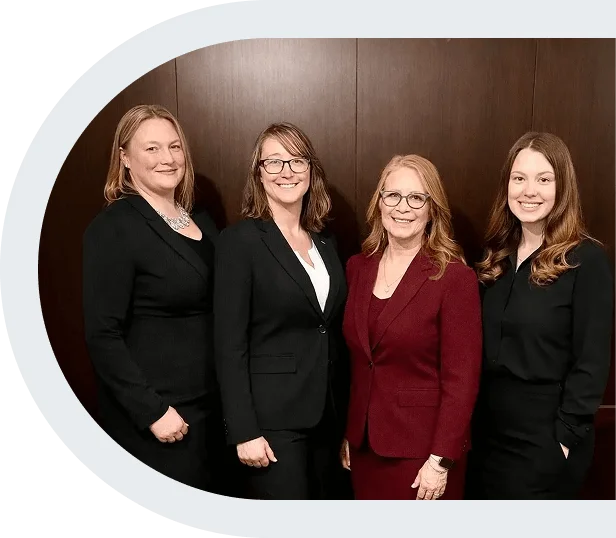
Meet Hammond Law Group Team
At Hammond Law Group, our estate planning attorneys work together to create meaningful, lasting estate plans for Colorado families. Each member of our team shares a commitment to personal connection, clear communication, and compassionate service.





Professional Associations






Questions or Schedule A Consultation? Click to Call (719) 520-1474
Questions or Schedule A Consultation? Click to Call (719) 520-1474
our Recent Blogs

This Year, Finally Check Estate Planning Off Your List
This Is the Year You Finally Check It Off the List There’s something…


How Is Trust Handled After Death in Colorado?
When a loved one passes away, many families face a difficult question:…

Local Law Firm Encourages Community to Re-Imagine Their Relationship with Death
Colorado Springs, CO., September 25, 2017 – Hammond Law Group of Colorado…
Our Locations
Hammond Law Group PC
Colorado Springs, CO
2955 Professional Place, Ste 300, Colorado Springs, CO 80904
(719) 520-1474
(719) 520-1474
Hammond Law Group PC
Denver, CO
865 Albion Street, Ste 250, Denver, CO 80220
(303) 736-6060
(303) 736-6060