



Colorado Probate Terms You Should Know
Schedule A consultationPerhaps because it is such an obscure and rarely encountered area of the law, there are many Colorado probate terms with which most people are unfamiliar. This is entirely understandable. Most people, apart from estate planning and probate attorneys, never have to deal with a probate case, and don’t have to have a thorough knowledge of the terms involved.
However, should you find yourself confronted with a situation that involves a probate case, there are several Colorado probate terms you should know. Here are some of the most commonly encountered Colorado probate terms that people have questions about:
Colorado Probate Terms
- Decedent: The legal term for a deceased person whose estate must be managed and disposed of through the probate process.
- Estate: The assets, debts, and other legal interests left behind by a decedent. Similarly, the assets, debts, and other legal interests left behind by a living person who has become incapacitated and requires someone to make decisions on his or her behalf.
- Probate: The legal process established by a state designed to answer the questions that arise after a person dies. Who inherits property? Which debtors get repaid? Who manages the property until the heirs can take their inheritances? All these questions get answered through probate.
- Estate Administration: The practical process of distributing an estate. The administration process is the responsibility of the estate administrator, who operates under the supervision of the probate court.
- Probate Court: A court that hears probate cases. Each state, in addition to having its own set of probate laws, also has courts that hear probate cases.
- Estate Administrator: The person assigned by the probate court to administer an estate. Also known as an executor or personal representative, the administrator does the day-to-day work of the identifying potential heirs, notifying creditors, and managing estate property until it’s time to transfer it to new owners. The probate courts act as a supervisor over the administrator’s actions.
- Letters of Administration: Also known as letters testamentary. These are the legal documents given to the administrator by the probate court that gives the administrator the legal authority to begin the administration process.
- Heirs: The people entitled to receive estate property. A decedent who leaves behind legally valid inheritance choices by creating a last will and testament gets to determine who the legal heirs are. Otherwise, Colorado’s intestacy laws determine who inherits estate property.
- Intestacy: Estates left behind by decedents who do not make inheritance choices are distributed in accordance with pre-existing intestacy laws. These laws determine who inherits property, and usually distributes that property to the decedent’s closest living relatives.
Estate Planning Workshop
Keep in mind that when you put a trust in place and properly fund the trust, your loved ones will avoid going through probate after you pass. For more information on avoiding probate, attend one of our estate planning workshops! Register online or by calling our office at 719-520-1474 or at 303-736-6060.
Ask A Question,
Tell Us Your Situation, &
Get A Consultation
Contact Us & We’ll Guide You Through Your Next Steps!
Required Fields*
Your Information Is Safe With Us.
We respect your privacy. The information you provide will be used to answer your question or to schedule an appointment if requested.
Our Practice Areas in Colorado Springs and Denver
At Hammond Law Group, we focus on helping Colorado families build strong, forward-looking estate plans that protect assets and preserve family harmony.


Real Clients, Real Reviews

Getting Started Has Never Been Easier — Attend a Workshop or Webinar
At Hammond Law Group, we believe that the foundation of good estate planning lies in knowledge and understanding. Our approach starts with education. Join our highly informative workshop on wills, trusts, estate planning, and more, where we provide you with comprehensive information to get you started in designing your personalized plan.
By attending our workshop or webinar, you not only … exclusive offer of a complimentary consultation with an experienced attorney
(a $500-750 value).
Our workshops fill up quickly so reserve your seat today.
Your Experienced Estate Planning & Elder Law Advisors
We have a team-centered approach. While each client’s family works with one attorney, our attorneys regularly discuss the design of our plans with each other in order to ensure we’re doing everything possible to help you meet your goals.
In addition, each client works primarily with one paralegal, who gets to know you and your estate plan intimately through the design and
implementation process. The biggest complaint people have about
lawyers is lack of communication, and by working as a team we have
virtually eliminated this complaint for our clients.
Learn more about our family and then let us learn more about yours.

Meet Hammond Law Group Team
At Hammond Law Group, our estate planning attorneys work together to create meaningful, lasting estate plans for Colorado families. Each member of our team shares a commitment to personal connection, clear communication, and compassionate service.





Professional Associations





Questions or Schedule A Consultation? Click to Call (719) 520-1474
Questions or Schedule A Consultation? Click to Call (719) 520-1474
our Recent Blogs
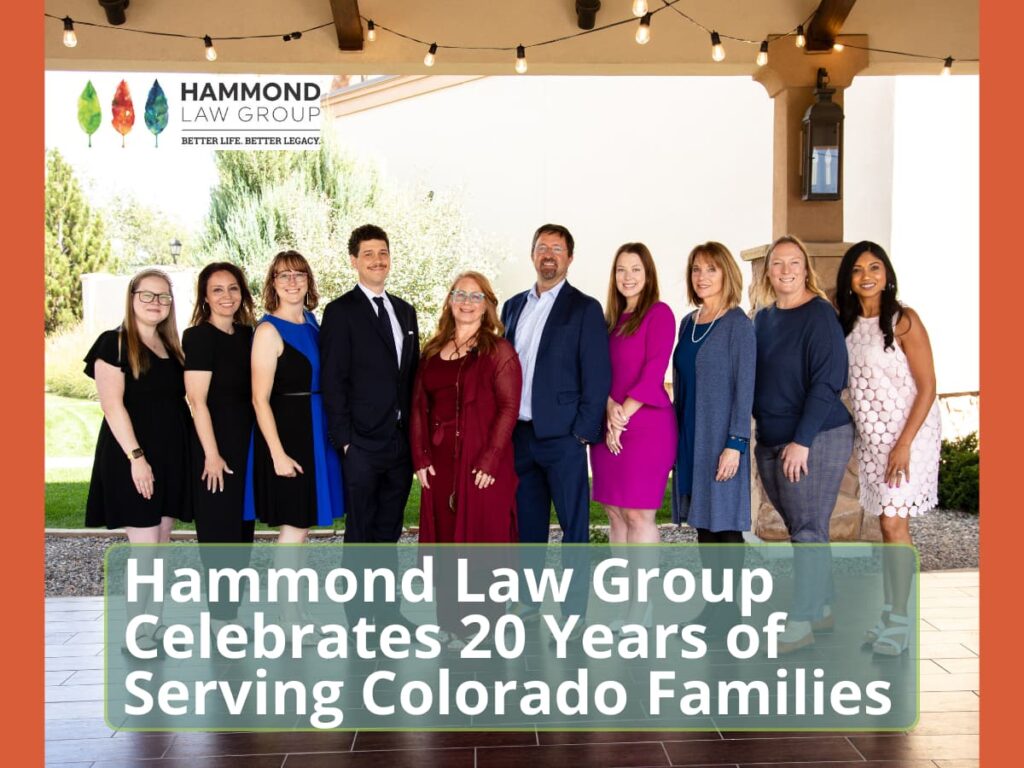
Hammond Law Group Celebrates 20 Years of Serving Colorado Families
Colorado Springs, CO — Hammond Law Group PC proudly celebrates a major…


What Is the Difference Between a Will and a Trust in Colorado?
You’ve worked hard to create a life you’re proud of, with a…
How Family Secrets Made This Probate Feel Impossible
When Family Secrets Complicate Probate: A Real-Life Case Study Alan Wyatt thought…

Our Locations
Hammond Law Group PC
Colorado Springs, CO
2955 Professional Place, Ste 300, Colorado Springs, CO 80904
(719) 520-1474
(719) 520-1474
Hammond Law Group PC
Denver, CO
865 Albion Street, Ste 250, Denver, CO 80220
(303) 736-6060
(303) 736-6060