



FAQ Archive Page
Schedule A consultationWhat exactly is life care planning?
It’s a holistic approach to preparing for your future health, well-being, housing, and financial needs. It’s not just about drafting a will or trust but also about planning for long-term care, medical decisions, and other aspects of aging. Live the life you want without becoming a caregiving burden to your loved ones.
I’m fairly young; why should I start thinking about life care planning now?
It’s never too early to start planning for the future. It’s a great way to make your wishes known, protect your assets, and provide peace of mind for you and your loved ones. Plus, the earlier you start, the more prepared you’ll be.
Is life care planning only for the elderly or those with terminal illnesses?
No, it’s not. Life care planning benefits everyone, regardless of age or health status. Life care planning is especially important for people managing one or two chronic illnesses. It can ease the burden of the caregiving process due to dementia, for example. Life care planning is about making choices for your future and ensuring your wishes are respected, regardless of what happens.
Can I change my life care plan once it’s set up?
Absolutely! Life is unpredictable, and your plan can be adjusted as your circumstances change. We’re here to help you make any necessary updates to ensure your plan always reflects your current wishes and needs.
Why is elder care coordination important?
Elder care coordination is important because it streamlines the caregiving process and ensures that aging individuals receive the appropriate care and support they need. It helps alleviate the burden on family caregivers, enhances communication among healthcare providers, and maximizes the well-being and quality of life for seniors.
How does your firm handle elder care coordination?
We work closely with you to understand your loved one’s needs and coordinate with various professionals. We help manage medical appointments, legal issues, and financial matters, making the process less stressful and ensuring the care your loved one deserves.
Can I trust your firm with my loved one’s needs?
Absolutely! Trustworthiness is one of our core values. We handle every case with utmost integrity and care, ensuring your loved ones’ needs are prioritized and met.
What services are typically included in elder care coordination?
Elder care coordination encompasses a range of services, including assessing and monitoring care needs, developing personalized care plans, coordinating medical appointments, facilitating communication among healthcare providers, connecting with community resources, providing caregiver support and education, advocating for the needs of the aging individual, and assisting with financial and legal considerations related to elder care.
Who can benefit from Medicaid planning services?
Anyone who may need long-term care in the future and wants to protect their assets from being depleted by nursing home costs can benefit from Medicaid planning services.
How does Medicaid planning work?
A Medicaid planning attorney will work with you to create a plan that meets your specific needs and goals. This may include transferring assets to a spouse or children, creating trusts, or purchasing long-term care insurance.
Can I still qualify for Medicaid if I have significant assets?
Yes, with proper planning, you can still qualify for Medicaid even if you have significant assets. A Medicaid planning attorney can help you create a plan that maximizes your eligibility while preserving your assets.
What happens if I don’t plan for Medicaid?
If you don’t plan for Medicaid, you may find yourself facing significant nursing home costs that can quickly deplete your assets. Proper planning can help you avoid this and ensure you receive the care you need while protecting your financial future.
When should I consider establishing guardianship?
A guardianship may be considered when a person is deemed incapacitated, meaning they are unable to make informed decisions or manage their affairs. It is typically pursued when there is no power of attorney in place or when conflicts arise regarding decision-making. Establishing guardianship involves a legal process where a court appoints a guardian for the incapacitated person and should be the last resort after all other options have been explored.
Do I really need an elder law attorney?
If you’re dealing with complex issues like incapacity, long-term care planning, retirement, estate planning, or elder abuse, an elder law attorney can be incredibly helpful. They’re knowledgeable about all aspects of elder law and can guide you through the process.
What should I expect when working with an elder law attorney from Hammond Law Group?
You can expect to work with a trustworthy, compassionate, and knowledgeable attorney. We’ll take the time to understand your unique situation and provide tailored advice and solutions.
What is the purpose of Medicaid planning?
Medicaid planning aims to protect seniors’ assets while still qualifying for Medicaid benefits. By strategically structuring their assets and income, individuals can ensure they receive necessary long-term care without depleting their savings entirely.
Who typically handles trust administration?
The person responsible for trust administration is the trustee, who is designated by the grantor when creating the trust. The trustee can be an individual, a group of individuals, or a professional entity such as an attorney, bank, or trust company.
How long does the trust administration process usually take?
The duration of trust administration can vary depending on the complexity of the trust, the assets involved, and any potential disputes or challenges that arise. In general, it can take anywhere from a few months to a few years to complete the process.
Are there any legal requirements or obligations that trustees must adhere to during trust administration?
Yes, trustees have a fiduciary duty to act in the best interests of the trust beneficiaries. They must follow the instructions laid out in the trust document, manage the assets responsibly, keep accurate records, and provide regular accountings to the beneficiaries. Trustees are also subject to legal and tax regulations applicable to trust administration.
What happens if a trustee fails to fulfill their duties during trust administration?
If a trustee breaches their fiduciary duty or fails to carry out their responsibilities properly, they can be held personally liable for any resulting losses or damages. Beneficiaries may have the right to take legal action against the trustee to protect their interests.
Can a trustee be removed or replaced during trust administration?
Yes, under certain circumstances, a trustee can be removed or replaced. This can occur if the trustee is unable or unwilling to fulfill their duties, if there is a conflict of interest, or if the trustee is found to have acted improperly. The trust document itself may also provide instructions or conditions for removing or replacing a trustee.
Can I create a will on my own without a lawyer?
While it is possible to create a will without a lawyer, it is generally recommended to seek professional assistance. A will lawyer has the necessary knowledge and experience to ensure that your will is legally valid, considers all relevant factors, and avoids potential pitfalls or ambiguities that could lead to disputes in the future.
What happens if I die without a will?
Dying without a will is referred to as dying “intestate.” In such cases, the distribution of your assets will be determined by Colorado state laws of intestate succession. This means that your assets may not be distributed as you would have preferred, and it can lead to disagreements among family members. Having a will in place ensures that your wishes are respected and followed after your passing.
How often should I update my will?
It is generally recommended to review and update your will periodically, especially when significant life events occur. This includes major changes such as marriage, divorce, the birth of children or grandchildren, acquiring new assets, or changes in your financial situation. By regularly reviewing and updating your will with the help of a will lawyer, you can ensure that it remains relevant and accurately reflects your current wishes.
What is the role of an executor?
An executor is a person named in your will who is responsible for carrying out your final wishes. Their duties typically include gathering your assets, paying off any debts or taxes, distributing your assets according to the instructions in your will, and handling any necessary legal or administrative tasks. It is important to choose an executor you trust and discuss your decision with them beforehand.
Does a will avoid probate?
No, a will does not automatically avoid probate in Colorado. Probate is the legal process through which a deceased person’s assets are distributed according to their will or state law if there is no will. A will actually goes through probate to validate its authenticity and ensure that the instructions outlined in it are followed. However, having a properly drafted will can streamline the probate process and make it easier for the court to administer your estate.
What is the role of a trustee?
A trustee is the person or entity responsible for managing the trust assets and carrying out the terms outlined in the trust document. They have a fiduciary duty to act in the best interests of the beneficiaries and are legally obligated to follow the instructions provided by the grantor.
How is a trust created?
To create a trust, the grantor must sign a trust document that outlines the terms and conditions of the trust. This document must also specifically enumerate all necessary powers for the trustee to carry out their duties. The grantor then transfers assets into the trust, formally establishing it. The trust document should specify the trustee, beneficiaries, distribution of assets, and many other important details.
How do I fund a trust?
Funding a trust involves transferring ownership of assets from the grantor to the trust. This typically includes retitling assets such as real estate, bank accounts, investment accounts, business entities, and other valuable possessions in the name of the trust. It is essential to consult with an attorney or financial advisor to ensure proper funding.
Can a trust be changed or revoked?
A revocable trust can be modified or revoked by the grantor during their lifetime as long as they are mentally competent to do so. On the other hand, an irrevocable trust generally cannot be changed without the beneficiaries’ consent or by court order.
Are trusts only for wealthy individuals?
No, trusts are not only for the wealthy. While they offer various benefits for high-net-worth individuals, trusts are beneficial for anyone who wants to protect their assets, provide for their loved ones, or avoid living or death probate. Trusts can be tailored to fit individual needs and financial situations.
What Is Estate Planning, and Why Work With an Attorney?
Estate planning is the process of evaluating your situation and goals and designing a plan to ensure things go smoothly when your time comes. It includes preparing the legal documents and instructions that guide how your assets and personal affairs will be managed in the event of your incapacity or passing. A thoughtful estate plan also outlines how your property will be handled, who will make financial and healthcare decisions for you, and how you’d like to provide for your loved ones. It also includes planning for your pets, digital assets, personal property, and many other issues that aren’t covered by legal documents alone.
Working with estate planning attorneys in Colorado Springs and Denver helps you take the right steps from the beginning. At Hammond Law Group, you will find the process clear and approachable. Our attorneys take time to understand your goals, discuss your options, and help you create an estate plan that reflects your wishes. Rather than using one-size-fits-all templates, your documents fit your unique situation, giving you confidence and clarity about your future and your family’s well-being.
What Documents Are Included in an Estate Plan?
A well-designed estate plan includes several types of estate planning documents, each serving a specific purpose. These may include a will , which outlines how your assets will be distributed after death, and a living trust , which allows your property to be managed and transferred without going through probate .
You may also include a financial power of attorney , which authorizes someone you trust to handle your financial matters if you become unable to do so, and healthcare directives that express your medical wishes. Beneficiary designations , guardianship nominations , and advance care plans often play a role as well.
Our estate planning attorneys in Colorado Springs and Denver walk you through each document, explain how they work together, and make sure they align with your personal and family goals. We work with you to prepare a customized, cohesive, and easy-to-follow plan that brings comfort and peace of mind to you and your family.
How Is a Will Different From a Trust?
Both a will and a trust are foundational estate planning documents, but they serve different purposes. A will provides instructions on how to distribute your assets after death, and can name guardians for minor children. It becomes effective only after you pass away, and it typically goes through probate , the court process for validating and carrying out your wishes.
A trust , by contrast, is a legal arrangement that takes effect as soon as it’s created. A living trust allows you to manage your property while you’re alive and determine how those assets are handled after your death. Because assets in a trust are owned by the trust itself, they avoid conservatorship if you become incapacitated and avoid probate when you pass away, saving time, costs, and stress for your family.
Our estate planning lawyers can help you decide whether a will, trust, or a combination of both is right for you, depending on your priorities and the level of privacy and control you wish to maintain.
When Should I Start Long-Term Care Planning?
It’s never too early to begin long-term care planning . Many people start this process while they’re healthy and independent, which allows more flexibility and choice in arranging care options later. Planning ahead can help protect assets, maintain financial stability, and make sure your healthcare directives reflect your personal values.
Our estate planning attorneys assist with preparing strategies for Medicaid planning , retirement planning, and asset management so you can plan responsibly for future care needs. At Hammond Law Group, you’ll learn how to balance medical costs, family responsibilities, and your estate goals, so your loved ones can focus on supporting you rather than worrying about logistics.
Early planning not only provides peace of mind, but also gives you more control over where and how you would receive care in the future.
What Does an Elder Law Attorney Do?
Elder law attorneys help individuals and families go through legal issues that arise with aging. This may include Medicaid planning , guardianship , long-term care , and estate planning matters that protect both your assets and your dignity.
At Hammond Law Group, our team assists elders in Colorado Springs and Denver with compassionate, knowledgeable guidance. You need a firm that takes the time to listen and develop plans that help you maintain independence and financial security while preparing for future care needs. Whether you’re addressing housing options, powers of attorney, or conservatorship, it is possible to simplify complex matters into manageable steps so you can move forward with clarity and confidence.
Questions or Schedule A Consultation? Click to Call (719) 520-1474
Questions or Schedule A Consultation? Click to Call (719) 520-1474
Real Clients, Real Reviews
Professional Associations






Ask A Question,
Tell Us Your Situation, &
Get A Consultation
Contact Us & We’ll Guide You Through Your Next Steps!
Required Fields*
Your Information Is Safe With Us.
We respect your privacy. The information you provide will be used to answer your question or to schedule an appointment if requested.
our Recent Blogs
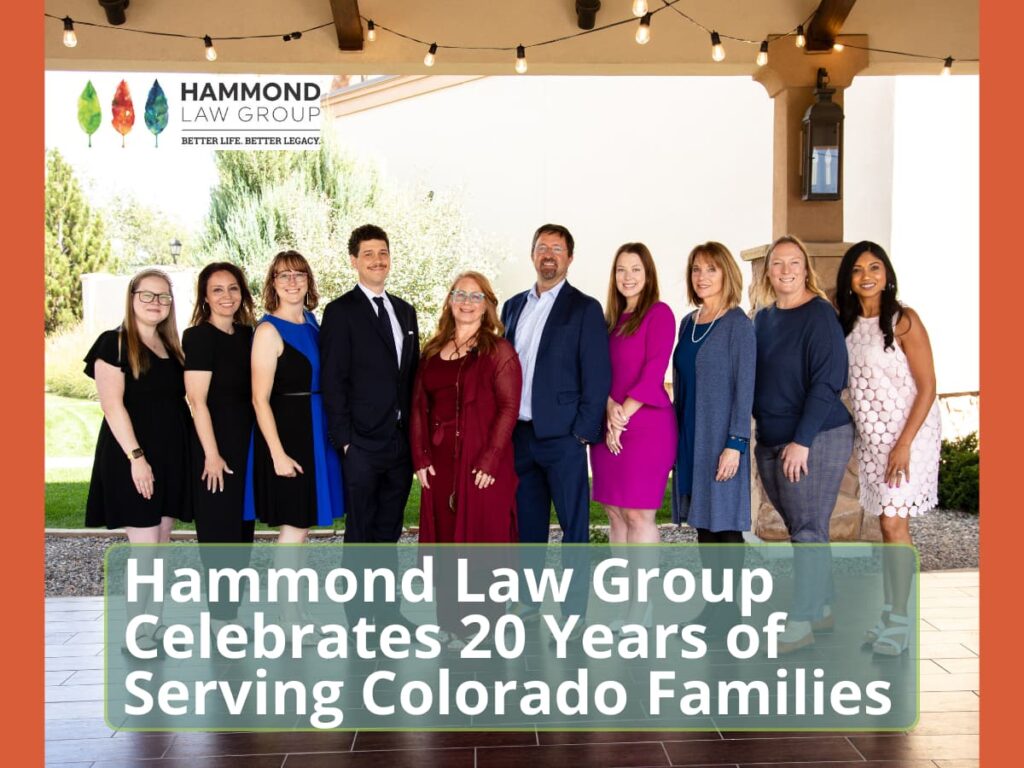
Hammond Law Group Celebrates 20 Years of Serving Colorado Families
Colorado Springs, CO — Hammond Law Group PC proudly celebrates a major…


What Is the Difference Between a Will and a Trust in Colorado?
You’ve worked hard to create a life you’re proud of, with a…
How Family Secrets Made This Probate Feel Impossible
When Family Secrets Complicate Probate: A Real-Life Case Study Alan Wyatt thought…

Our Locations
Hammond Law Group PC
Colorado Springs, CO
2955 Professional Place, Ste 300, Colorado Springs, CO 80904
(719) 520-1474
(719) 520-1474
Hammond Law Group PC
Denver, CO
865 Albion Street, Ste 250, Denver, CO 80220
(303) 736-6060
(303) 736-6060