



How the Rich Stay Rich Through Strategic Charitable Giving Strategies
Start Planning Your Future
If there’s one thing the rich understand, it’s how to maintain and grow their wealth from one generation to the next. And what better way to do that than by giving back in a way that optimizes their impact while perpetuating their family’s financial legacy?
By using vehicles like donor-advised funds, charitable trusts, and tax-savvy tactics for donating appreciated assets, those with significant assets can turbocharge the tax benefits of their philanthropy. In this guide, our estate planning lawyers pull back the curtain on the powerful ways to leverage charitable giving to keep more money in your family’s pockets.
Four Charitable Giving Strategies for Maximum Tax Benefits
While charitable donations may seem like giving money away, savvy philanthropists know how to leverage giving to actually build their wealth. From maximizing tax deductions to avoiding capital gains, here are four powerful tactics to make your generosity financially rewarding.
Donor-Advised Funds
A donor-advised fund (DAF) is an increasingly popular charitable vehicle that offers flexibility and tax advantages. When you contribute cash, securities, or other assets to a DAF, you are generally eligible to take an immediate tax deduction. The funds then remain in your DAF, where they can be invested and grown tax-free until you recommend grants to your favorite IRS-qualified public charities.
Major financial providers like Fidelity, Schwab, and Vanguard, as well as community foundations, offer donor-advised fund programs (DAFs). Setting up a DAF is straightforward; you maintain advisory privileges over investments and charitable distributions. This makes DAFs an excellent option for families or individuals who want to simplify their charitable giving while potentially maximizing tax benefits.
Qualified Charitable Distributions from IRAs
If you are 70.5 or older, you can make a tax-free transfer of up to $100,000 per year directly from your IRA to an eligible charity through a qualified charitable distribution (QCD). This allows you to satisfy all or part of your required minimum distribution (RMD) from your IRA and exclude the donated amount from your taxable income.
The benefit of QCDs is two-fold:
- You avoid being taxed on the distribution itself, and
- The donation counts toward your RMD for the year without increasing your adjusted gross income (AGI) as a normal IRA withdrawal would
To make a QCD, simply contact your IRA custodian and provide the name and tax ID number of the approved charity. The funds must be directly transferred – if you withdraw the money first, it will be treated as taxable income.
Donating Appreciated Assets
One of the most tax-efficient ways to give is by donating appreciated assets like stocks, bonds, mutual funds, real estate, collectibles, or other non-cash property you have held for over a year. When you gift these items directly to a public charity, you can potentially claim a tax deduction for the current fair market value while avoiding capital gains tax that would otherwise be due if you sold the assets first.
Most major charities are equipped to accept gifts of appreciated property. You’ll need to complete some paperwork, and the charity may have specific transfer instructions, but the process can yield substantial tax savings compared to giving cash proceeds after liquidation.
Charitable Trusts
Charitable trusts are another advanced charitable giving tool that can facilitate tax-efficient philanthropy.
Charitable Remainder Trusts
With a charitable remainder trust (CRT), you contribute assets to an irrevocable trust, which then pays you (or another named beneficiary) an annual income stream for life or a set period of years. After that term expires, the remaining assets go to your designated charities.
You can potentially claim a partial tax deduction in the year you fund the CRT and avoid upfront capital gains tax on any donated appreciated assets. You also spread out your charitable gift over time while retaining income payments.
Charitable Lead Trusts
Charitable lead trusts work oppositely – providing income payments to charity for a set period before any remaining assets pass to individual beneficiaries you name. While the trust assets are removed from your estate, you may owe taxes on the remainder gift once the charitable term ends.
Trusts tend to be more complex vehicles requiring involvement of specialized attorneys, so they are usually implemented as part of broader strategic planning for larger charitable gifts and estates.
Maximizing Your 2024 Charitable Tax Deductions
No matter which giving strategies you implement, there are some key rules to understand to maximize your 2024 charitable tax deductions:
- Obtain a receipt or documentation from the charity substantiating any cash donations over $250
- Most non-cash donations require an appraisal and specific IRS forms to claim a deduction
- Cash gifts are generally deductible up to 60% of your adjusted gross income (AGI), while appreciated assets face a 30% AGI cap
- If your total deductions exceed the AGI limits, you can carry forward the excess for up to 5 years
- Taxpayers who take the standard deduction cannot claim additional charitable write-offs (unless donating directly from an IRA via QCD)
Many taxpayers employ “bunching” strategies, concentrating two or more years’ worth of charitable gifts into a single tax year to exceed the standard deduction threshold. This enables itemizing deductions that year to increase the tax benefits.
Long-Term Charitable Giving Through Your Estate Plan
In addition to making gifts during your lifetime, you can also incorporate charitable giving into your comprehensive estate plan. Two common ways of doing so are by:
- Including qualified charities as beneficiaries in your will or revocable living trust to direct specific assets or percentages of your estate
- Naming charitable organizations as beneficiaries on life insurance policies or retirement accounts like IRAs and 401(k)s
Upon your passing, those inherited assets transfer directly to the charity without triggering income taxes. Your estate would receive a charitable deduction for the full amount, helping reduce potential estate taxes.
Our charitable planning attorneys will guide you through the different strategies to achieve your charitable giving goals as part of an overall plan for transferring your wealth. We look at the full picture of your finances, family’s needs, and philanthropic vision to create a plan that maximizes your charitable impact both during your lifetime and after you’re gone.
Get in touch with Hammond Law Group today to discuss charitable giving strategies tailored to your unique situation. Our team is here to help you reach your philanthropic goals while minimizing tax burdens through estate planning.
Our Practice Areas in Colorado Springs and Denver
At Hammond Law Group, we focus on helping Colorado families build strong, forward-looking estate plans that protect assets and preserve family harmony.


Real Clients, Real Reviews

Getting Started Has Never Been Easier — Attend a Workshop or Webinar
At Hammond Law Group, we believe that the foundation of good estate planning lies in knowledge and understanding. Our approach starts with education. Join our highly informative workshop on wills, trusts, estate planning, and more, where we provide you with comprehensive information to get you started in designing your personalized plan.
By attending our workshop or webinar, you not only … exclusive offer of a complimentary consultation with an experienced attorney
(a $500-750 value).
Our workshops fill up quickly so reserve your seat today.
Your Experienced Estate Planning & Elder Law Advisors
We have a team-centered approach. While each client’s family works with one attorney, our attorneys regularly discuss the design of our plans with each other in order to ensure we’re doing everything possible to help you meet your goals.
In addition, each client works primarily with one paralegal, who gets to know you and your estate plan intimately through the design and
implementation process. The biggest complaint people have about
lawyers is lack of communication, and by working as a team we have
virtually eliminated this complaint for our clients.
Learn more about our family and then let us learn more about yours.
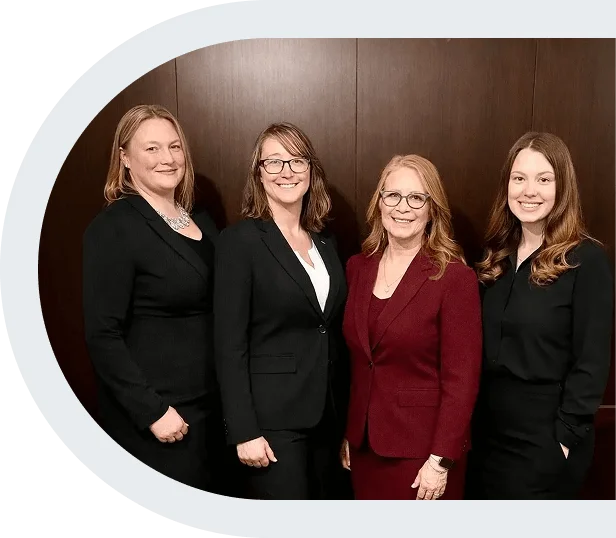
Meet Hammond Law Group Team
At Hammond Law Group, our estate planning attorneys work together to create meaningful, lasting estate plans for Colorado families. Each member of our team shares a commitment to personal connection, clear communication, and compassionate service.





Professional Associations





CONTACT US NOW FOR A COMPLIMENTARY DISCOVERY SESSION — CLICK TO CALL (719) 520-1474
CONTACT US NOW FOR A COMPLIMENTARY DISCOVERY SESSION — CLICK TO CALL (719) 520-1474
our Recent Blogs

This Year, Finally Check Estate Planning Off Your List
This Is the Year You Finally Check It Off the List There’s something…


How Is Trust Handled After Death in Colorado?
When a loved one passes away, many families face a difficult question:…

Local Law Firm Encourages Community to Re-Imagine Their Relationship with Death
Colorado Springs, CO., September 25, 2017 – Hammond Law Group of Colorado…
Our Locations
Hammond Law Group PC
Colorado Springs, CO
2955 Professional Place, Ste 300, Colorado Springs, CO 80904
(719) 520-1474
(719) 520-1474
Mon – Fri: 8:30AM – 5:00PM
Hammond Law Group PC
Denver, CO
865 Albion Street, Ste 250, Denver, CO 80220
(303) 736-6060
(303) 736-6060
Mon – Fri: 8:30AM – 5:00PM